

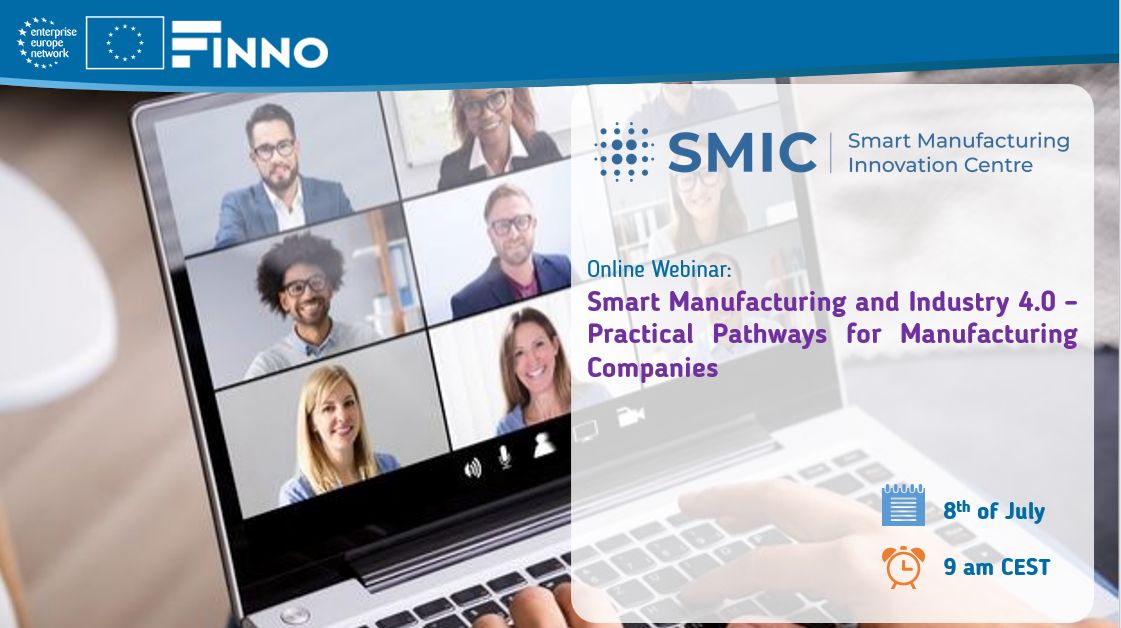
📆 8th of July
🕙 9 am till 10.30 am CEST
As global competition, product complexity, and customer expectations continue to increase, manufacturers are under growing pressure to become more agile, efficient, and resilient. Smart Manufacturing and Industry 4.0 technologies offer significant opportunities to improve productivity, quality, flexibility, and sustainability—but successful implementation requires more than technology alone.
This webinar will provide an accessible introduction to the concepts of Industry 4.0, Smart Manufacturing, Smart Factories, Artificial Intelligence, and Digital Twins. The focus will be on practical industrial use cases demonstrating how companies have successfully applied these technologies to optimize production, logistics, planning, and decision-making.
Participants will gain insights into:
- The fundamentals of Smart Manufacturing and Industry 4.0;
- Real-world implementation examples from manufacturing and logistics environments;
- The role of Digital Twins, AI, data analytics, and connected systems;
- Common mistakes organizations make during digital transformation initiatives;
- Practical recommendations on how to approach digital transformation strategically and avoid costly pitfalls.
The webinar is intended for manufacturing company managers, production leaders, engineers, digital transformation teams, innovation managers, and policy makers interested in improving industrial competitiveness through advanced manufacturing technologies. Format: 45–60 minute presentation followed by an interactive discussion and Q&A session.
Registration link
Trainer: Prof. dr. Herakovič
Prof. dr. Herakovič is one of the most prominent figures in Slovenian research and expertise in industrial automation, smart factories and knowledge transfer to business. He is the Head of the LASIM laboratory at the Faculty of Mechanical Engineering at UL and holds the Chair of Manufacturing Technologies and Systems department. He received his PhD in 1995 from RWTH Aachen University in Germany, one of Europe’s leading technical universities. His career includes extensive experience in both academia and industry. He has worked in industry for several years and was Under Secretary of State at the Ministry of Education, Science and Sport (MEST) for four years. He has also been a member and chairman of various boards and professional associations at home and abroad.
Organisers: